Chickenpox (Varicella)
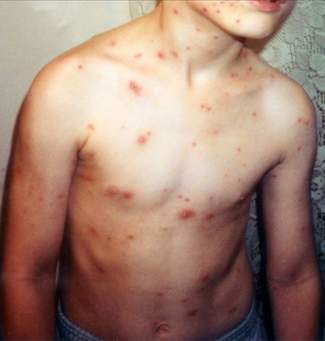
What is chickenpox?
Chickenpox is an infection caused by the varicella-zoster virus. It causes an itchy rash with small, fluid-filled blisters. Chickenpox is highly contagious to people who haven’t had the disease or been vaccinated against it. Today, a vaccine is available that protects children against chickenpox. Routine vaccination is recommended by the Centers for Disease Control and Prevention (CDC).
Causes:
Chickenpox infection is caused by a virus. It can spread through direct contact with the rash. It can also spread when a person with the chickenpox coughs or sneezes and you inhale the air droplets.
Symptoms:
- Initially, a person may have fever, tiredness, loss of appetite and headache, which can last 1-2 days.
- People then develop a rash that turns into itchy, fluid-filled blisters, then the blisters turn into scabs. This process typically last 5-7 days. The rash usually develops 10-21 days after exposure (average 14-16 days).
If you have symptoms, it’s important that you contact your health care provider.
Transmission: The virus can be spread from person to person by direct contact and also by breathing airborne particles. A person with chickenpox is typically contagious for 1-2 days before the rash begins, and until all of the blisters have crusted/scabbed.
Risk factors:
Your risk of becoming infected with the varicella-zoster virus that causes chickenpox is higher if you haven’t already had chickenpox or if you haven’t had the chickenpox vaccine. It’s especially important for people who work in child care or school settings to be vaccinated.
Most people who have had chickenpox or have been vaccinated against chickenpox are immune to chickenpox. If you’ve been vaccinated and still get chickenpox, symptoms are often milder, with fewer blisters and mild or no fever. A few people can get chickenpox more than once, but this is rare.
Prevention: If you have chickenpox, please protect others by staying home until all of the blisters have scabbed.
Vaccination is effective at preventing chickenpox. Two doses of vaccine are recommended for children age 1 year and older and also for adults, if they have not had the disease. Pregnant women should not receive the chickenpox vaccine.
Two doses of vaccine are 98% effective at preventing chickenpox and 100% effective at preventing severe chickenpox.
Chickenpox can cause serious complications in newborns, people with an immune deficiency or cancer, and those who take systemic steroids. These individuals should avoid people who have chickenpox.
If you may have been exposed, call a health care provider if you have:
- Never had the chickenpox disease or received 2 doses of the chickenpox vaccine
- Are pregnant
- Have a weakened immune system caused by disease or medication.

 The Health Counsellor
educative post
LikeLike